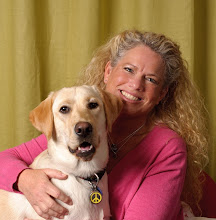
Showing posts with label Verbal. Show all posts

Monday, November 8, 2010

Moving On


This post won't have much to do with veterinary "stuff," but it does have to do with that incredible connection some of us have been fortunate to share with a very special animal in our lives. It is just personal ramblings-so won't be for every one.

Many of you know I lost my best friend, Verbal, earlier this summer-on Father's Day in fact. I never knew a heart could break like that. I have been so lucky to have good, understanding humans in my life to help me through the loss, but ultimately it has been just a terribly lonely and painful ordeal. Any one who has lost a "heart" dog or cat (or horse or rabbit for that matter) can relate to some of what I went through, and many people have been helpful in relating their experiences. Some told me of dreams or visions they had of their beloved departed pet-and how comforting that was for them. The dream was a way for that pet to "communicate" to their human, to let them know they were doing well, moving on, watching over them, or whatever the message was that they felt their owner needed to receive at the time. Regardless, it was almost always a means of closure, and I was so envious of that!

As time passed, I kept wondering why in the world I wouldn't dream of my dear Verbal dog. We had shared so much in this life, had been so very close, and I began to worry that maybe she WASN'T in a peaceful place, watching over me, maybe she was scared, alone, couldn't "move forward," that I had left things unresolved-you know how a grieving mind can work. I know my husband hurt, too, but he was getting on with life, and he didn't know what to do with me when I was crying my heart out every night. After a month of that, just exhausted from the pain, I did what I thought I "should" do-I got a puppy.

I visited only two puppy "brokers," and that is exactly what they were. The first was a true puppy mill, no matter how nice things might have seemed on the surface, and I couldn't in good conscience support that "business." The second was an actual rescue situation-adult dogs being bred well past "retirement" ages. There were 10 and 12 year old momma dogs with mammary tumors, flea and worm infestations and who knows what else-and I don't think any one could really match up which parents went with which puppies. Selling puppies would help the rescue group get the older dogs spayed and neutered and re-homed. I wished I could have stepped up and taken an older dog, but after just losing one old dog, I knew my heart wasn't in any kind of shape for that. I used my check book to help with what I could, and scooped up a mangy, pot-bellied skinny yellow puppy, was handed a bag of "Atta Boy" dog chow to tide her over ( give me a break,) and headed home.

I texted a picture of her to Michael on the way home. I just got the reply "It's a puppyyyyyyy!!!!" so figured that was an approval of sorts. It really didn't matter much-it was love at first site.

I'll fill you in later on the antics of "Alvy" and her wily ways of working her way into our lives...and hearts over the past few months. Suffice it to say, she has grown from a scrawny 10 pound 9 week-old babe to a pretty robust 6 month-old DOG now.

This past Saturday was a pretty terrific day all around. I soooo wanted to sleep in on that rainy morning, but made myself get up early so I could take Alvy to her training class. We are in a program called Sit Means Sit, and I can't say enough about how well she and her class mates are doing with their training. I should say "our" training-probably 80% or more of dog training is training the humans, and I am definitely in that category. We all meet in "real world" situations-parks and schools-so face all the distractions that are inevitable. It is amazing to see even very young puppies focusing on their humans, intent on figuring out the puzzles and wanting so very much to please. They have such a great time in the classes-lots of work, but lots of breaks to run around and play with classmates or tug on a toy, fetch a frisbee or yes, jump in puddles or whatever. I will certainly write more about this amazing training system-I'm a big fan, not only because of how well Alvy and I are doing, (she was "spotlight client of the month" in November-check out her Bio on their site) but also because so many of my clients and patients have taken part in it and some have begun solving even some major problems like aggression.

After class, Michael and I decided to take Alvy over to a dog park I read about on Whidbey Island. Now, we have plenty of dog parks around here-so why take a ferry ride? Well, the weather has a tendency to be a little better over on the Island, and this dog park just happens to be on a BEACH! Oh boy! Alvy had never been to a beach, and I was very excited to introduce her to all that meant. It was a great choice. The dogs were allowed to be off leash while on the beach itself, so Alvy could run play and body slam with all the other dogs-and of course, find all the dead stinky things to roll in, waves to jump in, and salt water to lap up (before she figured out that wasn't such a great idea!) We must have played for 2 hours-I thought I'd have to carry her back to the car, but she made it just in time to collapse on the pile of towels I actually remembered to bring. She was so darned happy! It did my heart good to give her this gift. I know we have other beaches pretty close, and this one really wasn't far at all-we will be doing the beach thing a LOT!

You can imagine we all slept very well that night. I had actually been pretty sick for several months and was finally starting to breathe better and sleep through an entire night without waking up in fits of coughing. And guess what happened that night? I dreamed about my dear sweet Verbal dog! It wasn't anything earth shattering or unusual-she didn't talk to me or anything like that. She was just comfortably walking by my side as she always did-and now I knew she always would-my old friend was there by my side, or rather, we were together, by each others sides-forever.

I know that after 5 months of wishing and hoping for a "sign" from her, my dear Verbal came to see me after we gave Alvy a perfect day-and she told me that was as it should be. Life goes on. The young whipper-snapper deserves all the love we have to give her (and all the stinky dead things to roll in!) Verbal was telling me that Alvy was lucky to have come in to our family-she would always know love and care (and fun!) but we are lucky to have her in our lives, too. Verbal would have hated having the youngster around her-it is why we never did have other dogs while we had Verbal. Young puppies were big ol' pains, disrespectful of older dogs who might be hurting like Verbal did. Despite this, Verbal was acknowledging that her humans' happiness was the most important thing to her-and if this obnoxious puppy could give us that happiness, that was as it should be. And by the way, she (Verbal) wasn't going anywhere. She would be right by my side as that puppy frolicked ahead. Moving on certainly doesn't mean replacing or forgetting.

Oh my. I have never been more relieved (or more happy) to have dreamed such a simple thing. It only took 5 months of wishing and hoping and praying...

A few hours later I was in church...and realized it was All Saints Day. We lit candles in memory of family or friends who died this past year. You can bet I lit a candle for Verbal. She was family. She was my friend. There was no one who better fit the qualifications. A friend sent me the link to this very sweet song/poem about dogs and God-check it out if you have the time. God and Dog

I have had quite a few friends and clients ask me when I might start to blog again. I don't know if I can keep up the momentum, but telling this story of Verbal's dream visit seemed worthy of an entry, maybe the start of something regular. But regardless, it is a pretty good story, isn't it?

Peace,
DrReneigh

Sunday, August 2, 2009

What More, Verbal Dog?


Regular readers of this blog (and anyone who knows me AT ALL) know all about Verbal. She has been my constant companion since she joined my life over 11 years ago, an adorable, 4-week old yellow puppy. This tiny, broken thing was presented to the hospital where I was then working by a supposed "breeder." I use the word loosely-what kind of breeder would cross a Golden Retriever with a Yellow Lab, and do absolutely no pre-breeding health or temperament testing on the parent dogs? As much as I love this dog of mine, I have had numerous times called her "my genetic disaster," referring to her terrible hip and elbow dysplasia, her numerous bouts with cancer (yes, debatable whether genetically linked or not) and her, at times, questionable temperament.

Anyway, this little puppy had been attacked by her daddy dog-evidently she got too close to his food dish and he mauled her. 4 weeks old and he broke her jaw and ripped her tongue off. The "breeder" brought her in to be euthanized-they couldn't justify putting any money into this one puppy when they had 8 others at home, and it was pretty obvious how they felt about spending money on veterinary care.

Well, I would have euthanized the dog that did this to the pup in a heart beat-what would stop him from turning on a child someday? But there was no way I could end the life of this innocent little ball of joy, wagging her tail despite the terrible pain she had to be in. My husband and I had just happened to purchase our first home literally one month prior to meeting this wayward puppy, and we knew that adding a dog was in our future.....Can you see the big word "sucker" tatooed across my forehead? Well, there's worse things, for sure. We had the owner sign over the rights to the puppy, and we did surgery to fix her up right then.

Her lower jaw was broken, so we placed a pin through the length of it. Her tongue was reattached, and we could only cross our fingers and pray that it would be functional after such a dramatic injury. To this day, she has a huge scar on the back of her tongue, and when she yawns, her tongue curls up, almost touching her right ear. I doubt it has much feeling on that side, so accounts for even more dribbling than usual after drinking water (but what labrador anywhere drinks neatly???) It isn't perfect, but at least she has a tongue, and that goofy sideways grin gives her even more character than the usual smiling, happy water dog that she is.

4 weeks is awfully young to wean a puppy from its momma, but this just wasn't a normal situation. We did our best choosing some pain medication for her, but were limited due to her age. It didn't seem to matter, though. She was up and eating that first night after surgery, and was carrying a frisbee that was bigger than her later that week. Eating and carrying something, Frisbee, tennis ball, stick-SOMETHING-have been THE themes of her life ever since! She was our first (and so far only) dog in the family, but not the first pet. Flake was our "top dog," even though she happened to be a Maine Coon cat. She was bigger than the puppy at the time, and even though not exactly thrilled with the new addition, handled her just fine. The curious puppy couldn't help bouncing up to the giant cat asking her to play, and came away more times than not with a swat on the nose but hardly humbled at all. To this day, Verbal goes up to the various kitties in her life a bit cautiously, fully expecting to get whacked, but unable to resist-she just loves them so much!

Since I brought this broken little thing home kind of unexpectedly, I thought it would be best if I let Michael name her. We had just seen a great movie, "The Usual Suspects," one of Michael's favorites, and the main character, played by Kevin Spacey, actually had two names. "Keyser Soze" just didn't seem like a good name for a little girl puppy, so "Verbal" it was. We kind of thought it would be a joke, too, since how could a puppy whose tongue was ripped off and jaw was broken be very talkative? Ha! The joke was on us! Verbal more than lived up to her name, and very few people who meet her know the source of her name-they just assume it is because of how darned much she likes to talk.

Since she had no trouble eating, she began growing like a weed. It was only two weeks before we realized that pin in her jaw would have to be removed. I took her to work, anesthetized her, and pulled the pin, but during her recovery, Verbal's heart stopped! I went into emergency doctor mode, performing CPR, injecting epinephrine into her heart, and sure enough, that plucky little puppy came back to us. I got the job of reviving her done-then went and puked my guts out. Being mom and doctor at the same time is really hard to cope with, but it was good to know that I could automatically go into emergency mode when needed-and deal with the emotions of the situation later. Verbal actually suffered hypoxia during her cardiac arrest. The lack of oxygen to her brain resulted in her being very wobbly and unsteady when walking for a few days-and scariest of all, she was actually blind for a day! Of course, we didn't know it would only be 24 hours, and it was a horrible time when we didn't know what was going to happen to her. Michael was adamant-we were NOT getting a seeing eye dog for our puppy! Thankfully, she regained her sight the next day, and gradually got more steady on her feet. An anesthesiologist I consulted with thought her blood glucose might have been too low during her procedure, resulting in the hypoxia. While adult or even older puppies can be safely fasted prior to anesthesia, it just isn't safe to do so in these neonates or very young puppies for just this reason. This was just one of so many things Verbal has since taught me about medical issues that I would be able to use for my future patients. I know she came into my life for a reason, making me a better veterinarian, despite what people say about how lucky she has been to have me (a vet) for her owner. She has given me far more in my life than I could ever have given her.

After that anesthesia fiasco, I swore I would make her suck it up and just stand there for her spay. Not really, but I sure was holding my breath during that surgery when she was about 6 months old. I think the anesthesiologist was right about that low blood sugar as a neonate-she has never had anesthetic complications again-and she has had a LOT of surgeries in her life.

Verbal was only about 2 months old when I began noticing how she ran with both of her hind legs kind-of "rabbit-hopping" together. Normal dogs have hind legs that move independently of each other; this rabbit-hopping gait was indicative of pain, discomfort, or at least some limitation of movement in her coxofemoral (hip) joints. We took some radiographs of her hips and found out that she had a terrible case of hip dysplasia. I probably blogged about it before, but where there should be nice deep sockets or cups, Verbal's hips had flat plates. There was no where for the round heads or balls of the femurs to fit. Her right side was much worse than the left, and unfortunately, surgery was in her very near future. I took her x-rays and visited a surgeon I respected and trusted. He told me that the "usual" surgery to repair hips in such a young dog, a TPLO or triple pelvic osteotomy (breaking the hip in three places and plating them together in alignment for the femoral heads to seat better) just wouldn't work because of her particular anatomy. We would have to wait and do at lest one if not two total hip replacements. Since these surgeries can't be done on growing dogs, and since she was already showing signs of pain, we decided to do an FHO or femoral head osteotomy on her right hip. This involved removing the ball and neck of the bone so it would no longer cause bone-to-bone contact and therefore no more pain. Read the blog on 3/24/09 about Quik and his screening for hip dysplasia for more info.

Her hip surgery went well, and so did her spay, thank goodness. She was pretty much pain free-and she went everywhere with me. I was so lucky! I had a small mobile (house and farm call) practice at the time, so she hopped in and out of the truck, waited patiently while I doctored any sick animals, and looked forward to getting on the way again. Well, there are a few things she isn't so "patient" and good about. When she sees cows, for example, she just has to let them know who's boss. She doesn't do this for any other animals, unless a dog is obviously challenging her, jumping up and growling at "her" car-then it is only natural that Verbal gives them a piece of her mind. She also loves to "attack" the scrubbers and brushes when we go through automatic car washes. I really don't think she is afraid or anything-I think it is a big game and she is just having fun. But boy! Those windows get all steamed up and drool-y by the time we are driving out the other side. Nice and clean on the outside-pretty much a disaster on the inside. Oh well, simple joys in life....

I said she went everywhere with me-she really did. When I was doing some relief work, working for other veterinarians at their hospitals or clinics when they were taking vacations or going out of town for some reason, Verbal would always come with me, even when we had to stay in motels. In fact, we became "regulars" at one motel. Verbal and I stayed in the same room on the top (3rd) floor. She would often wake up before I really needed to and wanted to go outside to do her business. I REALLY didn't want to get dressed just to do that and then come back to go to bed again, especially on those cold, rainy, wintery days. I would just open the door, Verbal would run down the three flights of stairs, run to the back of the motel, pee really quickly, and come running right back up to our room. What a good girl!

So, I mentioned that the FHO surgery went well and she had no pain in that hip. This was so evident that she put most of the weight on her hind legs on that leg, and subsequently, one day, playing Frisbee (of course) came down from way too high of a jump and blew out her anterior cruciate ligament (ACL) I've blogged often about ACL injuries-Verbal's was no different-except for the fact that she had surgery on her blown knee 3 times! It now has severe degenerative joint disease, an "end-stage knee" according to the orthopedists, and she will always have pain there. We manage it the best we can using multi-modal analgesia (again, a frequent blog topic) and of course, no more high flying Frisbee games. And now at her age, a couple of tosses and chewing some of the cheap Frisbees to shreds is just fine by her!

Swimming is such good exercise for bodies, human and animal, as it allows working muscle without too much stress on the joints. Now, our hospital is in a community called Lake Stevens-and yes, there is a nice lake here. But do you think we could find a place to swim anywhere on that lake? There are "no dogs allowed" on the public beaches, and I just didn't have any friends who owned property with beach access. I was reprimanded by a "lake cop" one day while walking Verbal on an empty beach; we were standing by some HUMAN'S discarded dirty diaper. I mean, gross. We always carried baggies for "accidents," but there is just no reasoning for some things. I decided to write a short letter to the editor of the Lake Stevens Journal, our local little paper, asking if anyone would be able to offer their yard access to my gimpy yellow dog who needed swimming for physical therapy. The response was just amazing! We have a terrific community of pet lovers, that is for sure! I got over 30 responses offering Verbal a place to come swim any time she'd like. I can't help but wonder how many I would have received if I had asked for a place to swim for myself-a gimpy HUMAN! Another story there....One wonderful lady named Jo actually called me the day BEFORE the paper was released. I was really surprised by this until I learned that she worked part time for the Journal, stuffing inserts in it before delivery the day before release each week. Jo lives alone, her husband had died and her children had moved away. She has a very cute home and a secluded back yard right on the water. Jo offered it up to Verbal and me any time we wanted to come over....She is so sweet, Verbal just adores her, and the little steps going down into the water are perfect for my gimpy old lady. She goes crazy when we are driving up to Jo's house-she can smell the water and it just makes her day! We never stay very long, and I always have to make sure I hose her off really well after the swim. Lots of duck poo and other fun things growing in the water usually give my disaster dog a lovely case of pyoderma (skin infection) if I fail to do that. I never knew a dog could wag her tail while swimming and retrieving. I wish I could take her to the lake every day-such a simple thing makes her so darned happy. It's the least I should do for her.

So, life went on pretty fine for Verbal, normal aging stuff, an occasional lipoma (fatty lump) but nothing too awful. Then came a day when I noticed she was chewing at one of those apparent lipomas on her elbow-she just wouldn't leave it alone. I was constantly telling her to stop it-anyone with an itchy dog knows the lip smacking sound-it can drive you crazy! Then the light goes off in my head-duh! That is what I have clients monitor lumps and bumps for....does the pet "care" it is there? Licking and chewing at a lump is a tell-tale sign that we should remove it, or at least biopsy the thing. Verbal had quite a few lumps at this point, and needed a bit of some dental work, so we went ahead and removed it and sent that elbow lump in to the lab for analysis. Wouldn't you know it? It wasn't just a lipoma, it was cancerous. In fact, it was a type of cancer, hemangiopericytoma, that is very aggressive where it occurs, so much so that the oncologists recommended amputating her leg to control the disease. Ugh.

I already mentioned her terrible hips and the blown apart knee; amputating a front leg would have just been cruel. So, removal of the mass and follow up radiation therapy at the tumor site was the best treatment choice for my Verbal.

I can't remember if I have blogged about radiation therapy in pets yet. If not, I'll go into more detail some other time-it is pretty fascinating! But suffice it to say that Verbal had her treatments-15 of them!-and was cancer-free for 3 years-pretty awesome! Then another tumor popped up at a different site on the side of her chest-totally unrelated to the first one. My girl is just a tumor factory. This one was able to be removed with a very radical surgical procedure, cutting wide and deep margins around it and having those margins evaluated for sneaky little cancer cells. The margins were deemed "clean" by the pathologist, and now, 1 year later, there is still no evidence of regrowth of that tumor, thank goodness. I watch her like a hawk, of course, and every lump or bump she gets is tested with an FNA (fine needle aspirate) while I hold my breath and pray.

Last week we did Verbal's yearly blood panel. I certainly had been noticing her change in eating and drinking habits over the last year-she has been ravenous! She practically takes your fingers off when you give her a treat, and, as gimpy as she is, has been finding ways to get up on the table and counters to scarf up food (especially the cat food) left there. She would drain her water bowl dry on a regular basis, and even raid the toilet for more water. These were behaviors she had never done when she was younger, and I was oblivious, attributing them to being a bad old lady dog, losing her manners or something. Well, the bloodwork showed that she has a very specific reason for these changed behaviors- Verbal has hyperadrenocorticism, or Cushing's Disease. Dang! What more does this sweet thing need to deal with???

I'll blog specifically about Cushing's later on, but basically it is an endocrine (hormonal) disease, caused by too much cortisol in the body. It can occur for various reasons-Verbal's is caused by a tumor on her pituitary gland triggering her adrenal glands to produce too much of this hormone. Cortisol mimics stress in the body, and we all know how much havoc stress can play on our bodies. I guess it is good because we have an answer to why Verbal is behaving the way she is, and can now go about the process of getting her treated for it. As with so many diseases, Cushing's cannot be cured; it will be a condition we have to manage for the rest of her life. Monitoring that treatment is particularly important because over-treatment can be very dangerous; hypoadrenocorticism or LOW amounts of cortisol in the body is Addison's Disease and can result in weakness, collapse, shock or even death.

Whew! That was some blogging I did there, huh? Can you tell Verbal is a "subject" I feel passionate about??? I love that dog, and was just talking the other day with my friend, Valerie, about this very thing. Some times we are lucky enough to have one special dog in our lives, our "heart dog," the love of our life-however you refer to the relationship, if you are fortunate enough to experience it, you just know what I am refering to. This new diagnosis of Cushing's Disease is awful, but we will fight it as we have every other battle in her life. She hasn't stopped wagging her tail, smiling, and just generally goofing around. I saw her upside down, rolling back and forth in the newly cut lawn on Sunday, just reveling in the feel and smells and all. You make what you will of life, and Verbal sure has made hers full and happy, despite all the challenges along the way. Yep, she has taught me so very, very much. I love you, Verbal dog.
Peace,
DrReneigh


Tuesday, March 24, 2009

Run Quik, Run!

Many people who know about dogs, especially the larger breeds, know that they can be prone to joint problems, particularly hip dysplasia. Just what is dysplasia and how does it affect our 4-legged friends? Dysplasia actually refers to the abnormal growth or development of the part of the body affected. My poor dog, Verbal, has both hip and elbow dysplasia. In hips, there would be a bad "fit" of the ball and socket joint-the femoral head and acetabulum. Normal hips have smooth rotation of the femoral head in the acetabulum due to this proper fit along with the cartilage covering and lubricating fluid in the joint.

When an animal (yes, there are some breeds of cats who also get this) has hip dysplasia, the ball and socket do not fit well. The acetabulum is flattened and the femoral head is not held tightly in place, causing slippage and subsequent friction. This makes for an unstable joint and the body’s attempts to stabilize the joint only end up causing changes in the bones of the joint-this is arthritis, and can occur even in very young dogs. Verbal was noticeably "rabbit hopping" in her hind legs due to discomfort when she was only 6 weeks old! That rabbit hopping gait when a dog is running or going up stairs can often lead us to a diagnosis of hip dysplasia, but not always.

We know that some pets may show their discomfort due to hip dysplasia at a very young age as Verbal did, or may not have pain until severe arthritis changes occur in the joint as they age. Radiographs of the joint show us the changes that occur, but the degree of those changes don't necessarily correlate with the severity of lameness. Some very badly lame dogs may only have minor changes on the x-rays and some dogs with terrible x-rays may never show pain. It is true that lighter weight dogs do better than overweight or even normal weight dogs, and some dogs are just more stoic than others.

Genetics are a major cause of hip dysplasia, so ethical breeders always screen their breeding animals BEFORE they use them in their breeding programs. The OFA or Orthopedic Foundation for Animals has a huge data base of many heritable diseases of animals, and hips are a big part of this. Preliminary testing can be done at any age, but "official" OFA radiographs are taken and submitted for evaluation at 2 years of age. These must be done under sedation or anesthesia to ensure accurate positioning (and in affected cases, pain free positioning.) That is why our handsome patient, Quik, came to see us this morning. He is still too young for the official testing, but his owner found out Quik has a half sister affected by hip dysplasia. It is just smart to do all she can find out early if Quik might be affected as well-before too much degenerative joint disease occurs as a result. Some treatments can be done on younger animals that wouldn't be effective on older ones.

Quik is a bit shy but his owner has worked with him a lot. He is a very good boy, and did well for his exam and sedation. We positioned him for his hip radiographs by laying him on the table and extending his hind legs back and flat, parallel to the table-definitely not a position an awake dog would want to make willingly! You'll notice the hips are symmetrical and the patellas are on top of the femurs-good landmarks to tell us we have decent positioning for the radiologist to evaluate the joint conformation. Quik isn't showing any signs of pain or discomfort and when I palpated the joint there was no problem with the motion in either hip. This is truly a screening procedure today. We also took radiographs of his elbows while we were at it and the radiologist should get us his opinion in a day or so.


I mentioned there are "treatments" available for hip dysplasia if we diagnose this condition. So far, Quik's hips look really good. In fact, his owner said he lifted his leg to pee just like the big boy he is for the first time this morning! Oh, the things we celebrate around here :) Young dogs with severe problems of conformation, such as when the ball is luxated or not in the hip socket can be treated surgically with a TPO or FHO-triple pelvic osteotomy and femoral head ostectomy. The TPO is a procedure where the pelvis itself is broken and re-plated in three places to re-position the socket over the femoral head. The FHO is considered a salvage procedure but I really like it and is what we did for Verbal. She actually didn't have a socket but more of a "plate"-that joint was really deformed-so re-positioning it wasn't an option. Instead, we removed the femoral head completely and therefore there was no longer any bone to bone contact-and no more pain. Her gait was fine after that, relying on the strong thigh muscles to support her limb-that is until she blew out her ACL in that same leg some years later! Very young dogs also may benefit from a juvenile pubic symphysiodesis, a procedure where the pubic symphysis (the cartilage seen connecting the right side of the pelvis to the left side) is fused early to allow for more normal alignment in puppies that may be predisposed to hip dysplasia.

Options for older dogs include total hip replacement surgery, where prosthetic joints are implanted, DAR arthroplasty where bone grafts actually build up the rim of the acetabulum to make a deeper socket for the femoral head to sit in. FHO's are still good options for older dog's, too.

Nutrition is a factor in "treating" as well as controlling degradation of the hip joint. Certainly we can't allow an affected dog to become too fat. Those large breed puppies who grow too fast or who have their bones and tendons grow at different rates put unnatural stresses on the bones, often causing dysplasia or other developmental problems to occur. One study showed that when puppies of hip dysplasia prone breeds were allowed to free feed, two thirds went on to develop hip dysplasia while only one third developed hip dysplasia when the same diet was fed in meals. Another study showed German Shepherds were nearly twice as likely to develop hip dysplasia if their adult weights were above average. Studies such as these have led to the development of puppy foods designed for large breed puppies, where the optimal nutritional plane is lower than for small breed puppies. It is just common sense that feeding a Great Dane is different than feeding a Chihuahua! There are nutritional supplements to help repair cartilage, pain medications, and anti-inflammatory medications. Physical therapy and massage are also important and helpful in non-surgical joint therapy. Many people have utilized acupuncture and other alternative therapies for their pets.

While I tease Verbal about being my "genetic disaster," it is actually true, and a heartbreaking thing to have happened to her. We can only hope that all people who breed dogs will be as responsible as Quik's owner is, screening for this devastating, painful disease and weeding out the affected ones from the gene pool. That way our dogs can run and play through out their lives, happy and pain-free-run Quik, run!

Peace,
DrReneigh

Thursday, February 26, 2009

Rub a Dub Dub, Tazzy in a Tub

No doubt about it, Tazzy needs a bath. She's looking a bit scruffy lately, and her skin is getting itchy. You may not realize that bathing a pet can be a medical procedure in some cases. Regardless, proper grooming is essential for the health and comfort of your furry friend, particularly the longer haired ones like Tazzy. Mats in the fur can twist all the way down to the skin and cause pinching and bruises. Owners who have tried to cut these out have inadvertently cut the skin when they used scissors in awkward places like armpits and behind ears. Dirt or urine and feces that soils the hair and skin can cause dermatitis or inflammation or infection of the skin, especially in skin folds or under the tail and between legs. Fleas are terrible little pests that certainly cause itching and allergies in a lot of animals. Dogs and cats can also get many of the same types of skin conditions that humans can, seborrhea or greasy skin, dry, flaky skin or dandruff, alopecia or hair loss. Even some metabolic issues like hypothyroidism and Cushing's disease can exhibit some skin problems.

There really are some important "how to's" when it comes to bathing a pet. First you need to understand the reason for bathing. Some may be healthy but just got dirty or rolled in something stinky. (Verbal just loves to do this! I think I mentioned once that the stinkier dogs are the most popular ones-they have a better story to tell when others come up to sniff them.) Long-haired critters frequently get things stuck in their fur, especially in the long hairs under their tail and along the back of their hind legs. Is the pet covered in fleas? Do they have a diagnosed skin infection or condition you need to treat topically with a medicated shampoo? Are they particularly itchy?

After answering those questions, you can choose the type of shampoo to use on your pet. Your veterinarian may have prescribed a medicated formula to use. There are many over the counter pet-friendly shampoos at pet stores, feed stores, even in grocery stores. Safety is particularly important if you are bathing a puppy or kitten. Be sure to avoid the types of "flea shampoos" that have pyrethrins as the active ingredient. 1 in 5 dogs and many more cats will have severe reactions such as tremors or seizures and some could die. We recommend simply using a regular shampoo and then using a safe flea product such as Frontline Plus after the pet is completely dried.

For a routine bath, it is nice to use a mild, soap-free shampoo with omega fatty acids. This will keep the pet's skin healthy and won't strip it of the essential oils needed to maintain healthy hair. There is also a lot less flaking and itching as a result. The omega fatty acids also make the topical flea product, Frontline Plus, work much more efficiently, so important knowing how expensive it can be!

The process of bathing isn't very complicated, but does require some work on your part. When using medicated shampoos remember-we are treating the skin, not the hair. If the pet's hair coat is particularly dirty, you should do a "pre-bath" with a general cleansing shampoo to remove the dirt. The second medicated shampoo will require much less of the more expensive medicated product. I like to dilute out the shampoo in a pitcher of water and pour this solution over the pet, allowing for a more even coverage over the body. Some medicated shampoos don't lather up very much, but do work them into the skin for 10 - 15 minutes (your veterinarian will have specific instructions) and then do a COOL water rinse. Warm water generally makes the skin tingly, and tingly skin can be itchy. Cool down the water if your pet is itchy. Be sure to rinse thoroughly-then rinse again! It is important not to leave any shampoo in the hair coat where it could rub against the skin, especially in the armpits or groin. There are some leave-in conditioners available, again some have essential fatty acids and/or antihistamines to relieve itching which can be worked into the skin after rinsing out the shampoo.

How often should you bathe your pet? Some cats never get a bath their entire lives and seem to do just fine. They are meticulous groomers-if they stop doing this it is time to visit the veterinarian. During the summer when Verbal gets to go to the lake, she'll get a quick bath every time due to the algae and duck poo found there. She develops "swimmer's itch," a type of skin infection if I get lax in giving her those baths after swimming. Sometimes she just needs a "de-stinking" bath, and Kristina, my hospital attendant, is wonderful at taking care of her. Medicated baths will have instructions for frequency and length of treatment, often multiple times a week at first.

Remember to thoroughly brush out the hair coat BEFORE you get it wet-matted hair will shrink up in the water and be virtually impossible to comb out afterward. Also, use an ear drying product in the ear canals after any bath. We can't get our fingers deep enough in the ear canals to dry them out manually, so the liquid cleaner/driers are essential to good ear health. Wet ears like to grow yeast organisms and infections result.

Tazzy is a different dog after her bath-she's white again! She got her nails trimmed and anal glands emptied as well as those ears cleaned out-a full spa day! Her owners will be very pleased and much more likely to cuddle with her now that she looks and smells so much better. That is, until she decides to find her own "perfume" to roll in.

Peace,
DrReneigh

Friday, February 20, 2009

No More Jumping


Our young dogs and cats sure are happy, bouncy things, aren't they? Some literally fly through the air, off couches, beds, in and out of their cars or trucks, so eager to join us wherever we are, whatever we are doing. But there comes a time, all too quickly, when those bouncy, flying bodies pay the toll for all that concussion over the years. Last year I decided it was time to admit this about Verbal, and decided to get a ramp to help her in and out of the little SUV we drive in to work every day. It is a bit higher than the truck we used to have, and I was noticing her hesitations and occasional misses when scrambling into the back. Of course coming out never looked like a problem, but with all her weight coming down on her shoulders and front legs like that, I knew it wouldn't be long before that, too, would cause her pain.

Training a dog to a ramp is important, especially in scardey dogs like Verbal. Starting with a quality ramp is essential-don't cut corners. You will be using it every day, sometimes numerous times every day, so you want it to last. More important is that the dog feels secure when walking or running up and down the structure-cheap, flimsy ones might collapse on them or scoot out from under them and re-establishing trust will be very difficult after such an accident. Many people are tempted to make something out of plywood or something-I know Michael wanted to! But trainers across the board warn against it. If it is sturdy enough to support your dog, it will likely be too bulky to use easily; consistant use is essential to get the benefits and instill that confidence in your dog. If it is too light weight it may not be safe or long-lasting.

There are numerous types and styles of ramps specifically designed for dogs-you can find them in pet stores, feed stores, even on line. I got a pretty good deal on eBay for a 3-fold one, not too heavy and it supports up to 400 pounds. It has a rough surface for good traction when Verbal's paws are wet and has a snap attachment for the bumper of the car so it won't slip and fall down while being used. It folds up and stores in the back of the car very easily, a bit of a pain at first but we are both used to it now and Verbal knows to wait while I unfold it before jumping in or out. It is a big game to her, and of course, there are cookies involved!

Since food is always the way to Verbal's heart, that was the best way to train her to the ramp. Other dogs might be clicker trained, work for praise or toys. We started by just having the ramp unfolded in the house for her to sniff and get used to seeing for a few days-no big deal. Then we put her food and water dishes on the ramp when it was open flat on the floor. She got used to stepping on the textured surface-again, no big deal. We then graduated to practicing on a very gradual incline on the deck where there is just two steps elevation. We picked one direction to work on at first, walking down the ramp. Dog's do better learning one new trick at a time, so consider up and down two seperate "tricks." Their minds and their muscles will get in better shape this way. I figured jumping down would potentially cause greater harm in the long run, so chose to teach her the down direction first. I loaded up my pockets with treats, and away we went.

I put her at the top of the ramp, told her to wait, showed her the cookie, pointed to the ramp and said the word "ramp" simultaneously. I led her down the ramp with the cookie bribes in front of her. Don't just tease with the treats-keep feeding them or rewarding them and keep the dog totally focused on those treats, not the ramp. It is important NOT to use the dog's collar or harness to pull or guide them when they are learning how to use a ramp, even though it is very tempting to do this. Do use a leash and be prepared to support their whole body if they are unsteady or look like they are going to jump off the side of the ramp. Verbal gets excited and likes to jump off half way down lots of times-no cookies when she does this! Don't let them cheat like she does, and do be consistant-even if you are in a hurry it is important to always use the ramp. You can use the same techniques for teaching the opposite direction, for increasing elevations, and for teaching dogs who are using ramps for getting on and off couches and beds, not just in and out of crs or trucks.

Treats or whatever you deemed is the reward for your dog helps establish the habit, but you won't have to use them forever. I do keep a box of diet treats in the back of my truck right next to the ramp, but by now Verbal will do the ramp with or without treats. She is so proud of herself when she runs up and down that thing! Some dogs may need a running or trotting start to use the ramp, so be sure they have room to get started. When dropping the ramp down from a bed or couch, you might find it easier to position it alongside of it rather than straight out from it. It will afford better stability and security for your dog.

After one direction is going well, teach the other one. You really don't need two seperate commands- (up or down) "ramp" works fine either way. The dog will already be at the top or bottom so will know which direction he or she needs to go.

The best time to train your dog to use a ramp is before they really need one-before they are hurting or lame. That way there is no pain associated with the training situation. If your dog does have arthritis or other aches and pains already, as is usually the case, be sure you work with your veterinarian to have good pain management before you attempt this new training. Your dog will thank you! And likely your back will, too, if you are like me and were starting to do a lot of lifting of your dog in and out of the car. No fun, especially when Verbal was wet or muddy. A ramp can be terrific for our once flying friends who just need a little help to make their lives easier. Life is too often hard, so I'm all for things that make it easier!

Peace,
DrReneigh

Friday, January 2, 2009

"Nosey" Greetings

A dog's nose "knows" a lot. It is their way of exploring the world, checking out their surroundings and saying hello to friends. They will tentatively sniff out new dogs and humans alike, getting to know them through all those yummy smells. An older client once told me that since dogs sniff each other to get to know one another, the stinkiest dogs are the most popular-they have been places and done exciting things and have good stories to tell. That was his explanation for why dogs like to roll in stinky things; Verbal loves the bright green chicken poo, diving neck first onto the lawn to rub it behind her ears. It makes sense-that is where her pulse points are, just where you would put your finest perfumes. She must be a popular dog indeed.

It is no surprise that dogs like to sniff the hind ends of other dogs right off. Tails are up and noses are right there-it is probably the stinkiest part of the body if they haven't put on their "perfume" as Verbal does. The source of the very strong odor and thus the attraction for other dogs is the anal sacs, two small, grape-like structures just inside the anus, similar to a skunk's scent glands. They fill up with material from the anal glands that line the sacs, material with a foul, fishy odor that once you smell, you will be able to identify from a mile away. Normally, these sacs are emptied when a dog or cat defecates, secreting the material to lubricate the feces. Some animals aren't able to do this naturally, either because of an anatomical problem or because the sacs have become blocked or impacted. When this happens, the material may build up inside the sacs, causing pressure and discomfort. The most common sign of anal sac or anal gland impaction is scooting on the hind end, dragging the bum along the carpet or grass in an effort to release the blockage. Pets may lick obsessively or chase their tails; they may leak a bit of the material when the sacs over-fill and you will be treated to the offensive smell on your dogs fur or bedding (or on the seat of my car when Verbal jumps into it-bummer!)

If your pet shows any of these signs, a trip to the veterinarian is a good idea. Groomers often perform the anal sac expression procedure, but tend to do so via an external method-pressure being applied to the sacs outside of the anus and removing some of the contents. Most often this does not completely empty the sacs and they tend to fill up again pretty quickly. Groomers also aren't trained to recognize the signs of abnormal contents or feel of the sacs to determine if there may be an infection or other problem causing the impaction. Veterinarians or veterinary technicians are trained to express the sacs internally-inserting a (gloved) finger into the rectum and completely emptying the sacs, as well as palpating or feeling for abnormal growths or contents of the sacs. Occasionally antibiotics and/or pain medications may need to be prescribed for abscesses in the region. If pets get repeated infections, or just get impacted very frequently, a diet change may be recommended. I have seen animals with food allergies manifest themselves with chronic anal sac issues, only to resolve with hypoallergenic diets. Adding fiber to the diet may be enough to help some pets since this can bulk up the size of the stool and the larger feces may empty the sacs as it passes them by.

Very serious repeated infections or impactions that are very uncomfortable for the pet may warrant surgical removal of the sacs. The anal sacculectomy is not without its possible complications, however, due to the intricate nerves and blood vessels in the area, and the possibility of leaving gland material behind causing persistent draining tracts, so it must be carefully considered.

Is that more than enough information for you about anal sacs? If you would like to read some more or see some funny little graphics, check out the VeterinaryPartner.com page: Anal Sacs. I told you veterinarians need an iron stomach when we were talking about vomiting the other day. Anal glands produce one of the foulest known odors ever invented. We are always trying to find good odor neutralizers or deodorants to cover up the smell when we have finished the anal sac expression procedure on a pet-sending a pet home with a stinky bum isn't very good PR. But it does make for some "popular" dogs with good stories to tell.

Peace,
DrReneigh

Wednesday, December 31, 2008

Happy New Year!


Charlie started limping on his left hind leg about two months ago. Then he got better. Then he chased after a cat and the lameness returned. It seemed to get better with rest, so his owner wasn't too worried. And then yesterday he started limping again-what a bummer! Charlie's owner now realized her big guy would need some help with this problem.

When I see a dog with a hind limb lameness, especially in a large breed dog like Charlie, I expect the lameness to be in the stifle (knee) until proven otherwise. Literally 80% of these limping dogs have injured a structure in their stifles called a cranial cruciate ligament, and if it is an intermittent or on-again, off-again lameness as Charlie was showing, that percentage is even higher. Initially, the injury causes pain and thus the first signs of lameness are seen. Then when swelling occurs because of the trauma to the tissues and subsequent inflammation, the joint becomes tight and falsely stabilized, resulting in a more normal gait. With rest and/or anti-inflammatory medication, swelling can be reduced and the joint becomes "loose" again, there is bone to bone contact with arthritis developing quickly and, you guessed it, the lameness returns. It is a very predictable pattern and helps us diagnose this very common condition.

The stifle has some pretty complex anatomy. The cruciate ligaments (there are two of them, the cranial and caudal) cross each other in the center of the joint, keeping the joint from moving in an abnormal way. The cranial cruciate prevents the lower bone, the tibia, from moving forward out from under the upper bone called the femur. The action that damages this ligament most commonly is jumping and landing on it while simultaneously twisting to turn in another direction. My own dog, Verbal, ruptured her cruciate ligaments when she was playing frisbee. Trauma certainly plays a part in this condition, but many of the dogs affected are genetically predisposed due to their conformation-it is usually the dogs that are "upright" in their stifles that are prone to this injury. Their legs look straighter rather than angled when you look at them from the side.

Charlie is a pretty big dog (he is a Golden Retriever) with powerful muscles in his hind legs. Because of this, we needed to sedate him to manipulate his stifle to confirm the diagnosis as well as to take some radiographs of the affected limb. We gave him an injection that combined the sedative with a good pain reliever-this resulted in us being able to do a much more thorough and complete exam. Starting at the toenails (you bet that a broken toenail could cause enough pain to cause limping) and moving on up the limb, we found that Charlie had a chunk of something stuck in the hair between his foot pads. We clipped it out-there wasn't any sore adjacent to this "stuff" so I doubted this was the source of his pain. When I am palpating limbs for sources of pain, I usually compare the lame leg to the opposite normal leg. Charlie's left stifle was noticeably bigger than his right one, and there was some heat and swelling associated with the joint. It was also positive for the "drawer sign"-a test of abnormal motion that is present when cruciate ligaments are no longer stabilizing the joint. There is a graphic of this on the Veterinary Partner website to get a better idea:

Drawer Sign

Charlie's hips seemed fine. We took some radiographs to be sure there weren't any other problems in the stifle, (arthritis can develop quickly in these unstable joints) as well as a view of the hips to rule out hip dysplasia as another cause of pain. The radiologist will review Charlie's films, but they look pretty good to me. We gave Charlie a second injection, a reversal agent to wake him up from the sedative so he could go home right away. The pain relief medication would not be reversed, however-pretty cool, huh? He went home with some oral antiinflammatory and pain relief medications as well as a joint support supplement. We also discussed the importance of starting Charlie on a weight loss diet for his overall joint health as he ages but especially as he recovers from this injury.

Unfortunately, Charlie is facing surgery for repair of his damaged ligaments. His owner found out that rest only got them so far and then the lameness returned-this cycle will continue and will become even worse as degenerative joint disease sets in from the abnormal joint motion. If he were a smaller dog, less than 50 pounds or so, I could repair the stifle with an extracapsular procedure. This tightens up the joint to prevent the drawer motion using very strong suture material placed along the side of the stifle. In these larger dogs, however, a TPLO or Tibial Plateau Leveling Osteotomy is performed. This procedure, utilizing biomechanics of the knee joint, actually alters the angle of the joint, allowing the natural weight-bearing of the dog to stabilize the stifle. As it sounds, a TPLO is a complex, specialized surgery that requires special training and equipment. It is usually done by board certified veterinary surgeons and can be fairly expensive.

Charlie will be looking at rest and rehabilitation for a good 6 to 8 weeks after surgery. He really shouldn't be allowed to run or jump or even climb stairs at first. Passive range of motion exercises may help, and if there is an underwater treadmill available, that would be the best exercise of all to help build up muscles without stressing the joint or the osteotomy repair site. And then there is the very real possibility that he will have to go through all of this all over again if he ruptures the ligaments in the opposite leg.

Happy New Year everyone. We are closing the hospital early today so the staff can get started on their New Years' celebrations. I've enjoyed starting to blog this year and hope to continue it in 2009. Be sure to let me know if you have any topics you would like me to write about-I want to keep this fresh and interesting but need your help to do that!

Peace and Love,
DrReneigh

Wednesday, November 19, 2008

Verbal Dog


My office is lonely today; the blankets under my desk are empty because "Daddy" stayed home and is working from home today. This means he got to keep our dog, Verbal, with him. I am so very fortunate to have been able to bring her to work with me every day since we opened the hospital 6 years ago. Not everyone is that lucky, for sure. There are a lot of pets who spend most days alone, waiting for their humans to come home, some for long hours at a time. Verbal occasionally stays home when my husband Michael stays home. Getting to play in the yard HAS to be more fun than sleeping under my desk. But after the past two days of over the top emotions, I really don't like those empty blankets.

How about I tell you a bit about my wonderful Verbal dog? Can you guess where her name comes from? While it is true that she is very talkative and has an opinion about everything, that isn't the reason for the name. When I brought her home as a 4-week old puppy, I thought it best to let Michael have a go at naming her. We had just bought our first home, and I had already brought home chickens and ducks and we were working on fencing to move our horse home. Our favorite movie at the time was "The Usual Suspects" with Kevin Spacey. He actually had two character names in that movie, and Keyser Soze just didn't fit a cute little girl puppy. His other name was "Verbal" Kint.

Yes, 4 weeks is way too young for a puppy to be leaving its mom and litter mates. She was actually brought into the clinic where I was working that year to be euthanized after her daddy dog mauled her for getting too close to his food bowl. She had a fractured jaw and her tongue was torn to the point that only a 1/4 inch strip of delicate tissue held it in place. Well, I could understand putting down an aggressive dog that would do such a thing to a helpless puppy, (would he hesitate if it was a young child, after all?) but certainly not the pup. The "breeder" (I use the term loosely as this was a cross-bred puppy, Labrador and Golden Retriever, where no health testing of the parent dogs had been done prior to breeding-more on that later) refused to spend any money on fixing the pup as they had 9 or 10 others at home and the costs seemed too much to them. Michael and I really had started talking about adding our first dog to our family, so I asked for these people to surrender the puppy to me so I could assume her care.

The owners of the clinic were great, big-hearted people and allowed the surgery to place a pin in her tiny jaw and attempt the re-attachment of that hanging tongue. I was really concerned about the nerve and blood supply, and because the tissue was so swollen, didn't think the sutures would hold very well. But young animals have special angels looking after them and my new puppy healed very quickly. Yes, to this day her tongue is a bit goofy, curling up to her ear when she yawns, and most of her water goes anywhere but in her mouth when she drinks (is that any different from most floppy-lipped dogs?) But it adds a bit of character to her big goofy smile, and boy does she have a great smile!

She was growing quickly and healing well, so about 10 days later we anesthetized her to remove the pin from her jaw. Her heart actually stopped during the procedure and required aggressive CPR and an injection of epinephrine or adrenaline right into the heart itself to get things started again. Obviously we were successful in getting her back, but the lack of oxygen to her brain resulted in her being blind for a full day and she was ataxic or wobbly for about a week after! It was awful; I was so in love with that little girl already and hated seeing her like that. Thank goodness it was a transitory thing, likely brought on by low blood sugar. We usually fast animals (withhold food) before surgery and in very young patients like her, probably should have shortened this time. I threatened her that she would never get anesthesia again, having to stand very still and suck it up when she was spayed (just kidding!)

So, as I mentioned, with no health testing of the parents, it was inevitable that the puppies of that litter were affected by serious issues such as hip and elbow dysplasia, orthopedic conditions where the joints don't form normally and result in painful motion. Verbal was actually "rabbit-hopping" to prevent that pain at 6 weeks of age-that's how bad her hips were! She had a femoral head and neck ostectomy (FHO) surgery to completely remove the ball from the ball and socket joint of her worse hip joint. It was a terrific "salvage" procedure for a bouncy, busy young puppy where confinement would really be an issue if we chose other types of surgery with lengthy "keep them quiet and off the leg" recoveries. Her strong muscles of the thigh are holding the joint together.

Verbal has been what I lovingly call my "genetic disaster" dog. Other than her routine spay at around 5 months of age and the FHO and jaw and tongue surgeries, she has had multiple surgeries on her legs, been treated for allergies in the form of skin and ear issues, and has had several dental procedures. A few of her permanent teeth were affected by the pin placed in the jaw and subsequently "died." I have always been a bit cautious about her temperament, especially around little dogs, since she has that genetic trait passed on from that "wonderful" daddy dog of hers. She has had numerous lumps and bumps, but two very serious cancerous masses where she had radiation therapy for one and radical surgical excision for the other.
She has been a trooper, going through all those anesthetic procedures and now managing her multi-modal analgesia (pain management) for pretty bad arthritis. Her remaining teeth are worn down from always chewing on tennis balls when she was younger. I learned all about that from a veterinary dentist when I noticed her teeth were gradually wearing down to the gum line. He told me tennis balls have silica in them, a very abrasive substance. So be warned about letting your tennis ball-obsessed dogs chew on those balls. It is fine to play fetch, just take them away after the game so they aren't worrying them and abrading their teeth away like Verbal did.

Verbal is 10 years old this year and is slowing down like older dogs do. Since I really thought each time she faced cancer that I would lose her, every extra day with her is a wonderful gift.
She puts up with the various cats and other critters I have brought into our lives at different times in her life. She doesn't have time for me to be sad, often coming to me and pushing my arm up with her big nose, telling me things will be fine. She loves to chase the chickens and rabbits in our big yard, never wanting to catch them, often just bouncing in place to try to get them to go so she can chase them again. She is such a happy dog, always having a stick or stuffed toy in her mouth when one is to be had. Can you tell how very much I love that goofy yellow dog? Aren't we all lucky to have these great friends in our lives?

Peace,
DrReneigh

Wednesday, November 12, 2008

Multi-modal Analgesia


It is hard to believe, but there was a time (not long ago, really) when veterinarians did not prescribe pain relief medications to animals. Either because they don't cry like humans do or simply can't say "Ouch! That Hurts," it was believed that they didn't feel pain as we did. Others might have thought pain was present, but that it was a good thing, especially post-operatively, because it would keep a patient quiet and thus less likely to injure itself. That is just ridiculous, of course. I am so glad those times are behind us! Animals certainly do feel pain; they just express it in different, possibly more subtle ways. My veterinary technicians or nurses are trained to recognize these signs, particularly in post surgical patients. Vocalizing or crying is a pretty obvious sign. Rapid heart rate or dilated pupils may indicate pain or fear. The pet may have an abnormal posture or gait/lameness, or may be trembling or shaking. They might be licking or chewing at the sight of pain, be restless or depressed. A once totally sweet critter might now be grumpy or aggressive or might be distancing themselves from their humans. The only sign of pain might be anorexia (not eating.)
Treating for pain can be complicated by the patient's personality (cats are notorious for being difficult to medicate) or their reactions or sensitivities to some medications (non-steroidal anti-inflammatory medications, NSAIDs, for instance, commonly affect the gastrointestinal tract, causing vomiting or diarrhea or may affect the kidneys or liver when used long term.) We do know that it is usually better to use lower doses when possible to avoid side effects, but those low doses might not be as effective at managing the pain. That is why veterinarians are commonly using what we call "multi-modal"analgesia or pain management. It can start with combinations of drugs before, during and after surgeries, as well as medications for chronic pain.
My dog, Verbal, is a typical patient who gets several medications or therapies, often at lower doses than using just one of them alone, and getting far better benefits. She has very bad DJD or degenerative joint disease from hip and elbow dysplasia as well as an improperly healed cruciate ligament rupture in one knee. She is on a special diet for joint health, (some dog's are given additional supplements like glucosamine and chondroitin.) Verbal gets an NSAID called Derramax for the antiinflammatory benefits, and also gets tramadol, a weak opiod-type drug when she "over does it." There are many NSAIDs and opiods to choose from if dogs or cats have reactions to particular ones. I have also used medications such as gabapentin for neurogenic pain, and have just started using one called amantadine. It is also important not to forget the alternative therapies such as acupuncture, massage, or herbal remedies.
It can be a bit confusing for owners, juggling all the different pills and powders and foods, but if it is better for their pet's health, most are willing to give it a try. I hope to continue to learn and apply that knowledge to make my patients as comfortable as possible for as long as possible. They certainly deserve it!
Peace,
DrReneigh